Leonardo's Method · Chapter 6 of 15
4. Plans for Books
In addition to the above evidence of books actually written or at least in progress, there is considerable evidence of plans for books. On rare occasions such as Mad I 173v (c. 1499), we find him making a note on method: "You will put the whole text together and then you will divide it and add the commentary."[84] Then there were plans for specific subjects: painting, perspective, cosmology, transformational geometry and machines. The book on machines included his work on the four powers of nature (force, motion, percussion and weight). From a note on CA117re (1490) we know that he had begun planning this work at an early stage in his career: "First you will deal with weight, then with motion which gives birth to force, then you will deal with force and finally with percussion."[85] A few years later on CA149rb (1493-1495) he elaborates on his plan:
Beginning of the nature of weights.
The plan of your book will proceed in this form: first the simple beam, then supported from below, then partly suspended, then entirely, then these beams will support other weights.[86]
In the decades that follow this evolves into a major treatise which deals with the theory and practice of machines (cf. pl. 25-26) and their relation to the four powers of nature, all of which serves to introduce his treatise on human and animal movement. A separate book was planned for the flight of birds. The Codex on the flight of birds now in Turin is but a fragment of the projected work as we learn from a passage on K3r (after 1504):
Divide the treatise on birds into 4 books. The first will be on flying by flapping their wings. The second will be on flight without flapping thanks to favourable winds. The third will consider principles of flight common to birds, bats, fish, animals and insects. The final book will deal with instrumental flight.[87]
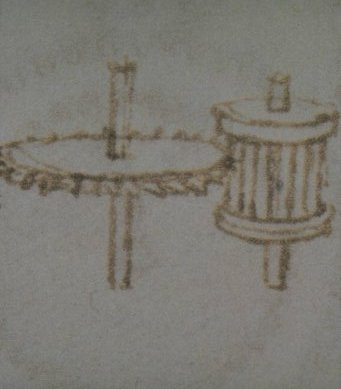
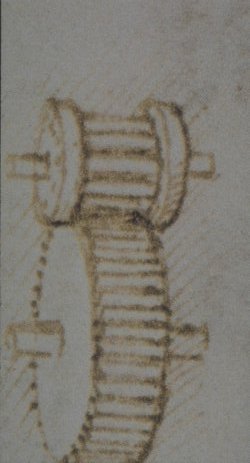
Image 64a
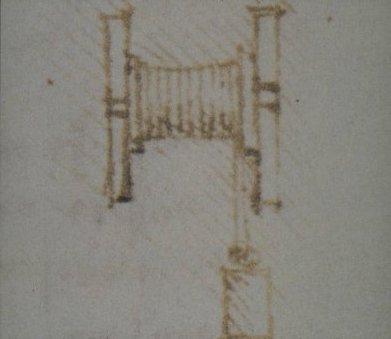
image 64b
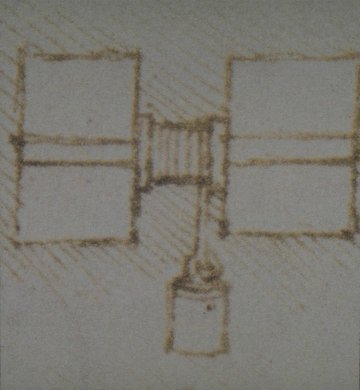
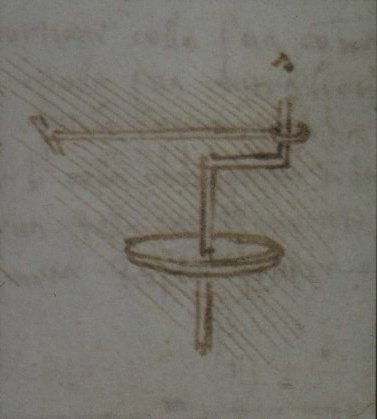
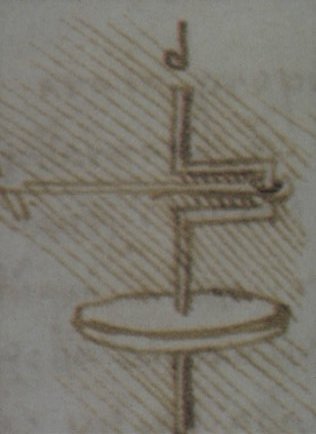
Image 69a
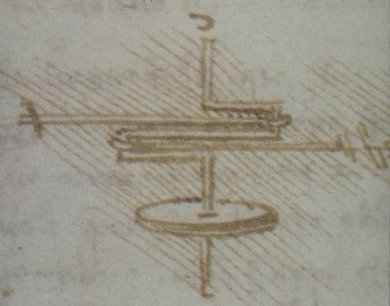
image 69b
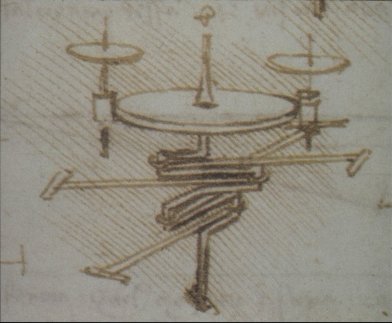
Instructive in this context is Madrid Codex I where we find a number of references to specific books and propositions. On Mad. I 105v-106r, for instance we find a series of (almost) consecutive propositions. Sometimes he provides the name of the book in addition to book and proposition number as when he refers to "Bk.5.3 of motion and percussion" (moto e colpo) on Mad. I 69v; "Bk.7.5 of motion and force" (moto e forza) on 94r; "Bk.7.5 and 9.7 of his theory" (teorica) on Mad. I 140v. Sometimes he simply refers to a proposition number without reference to book number as in "5th of theory" on Mad. I 147v, "5th" on Mad. I 71v, "6th" on Mad. I 87r and "7th" on Mad. I 140v. In 33 cases he gives book and proposition number[88]. If Leonardo were truly as chaotic as he is generally assumed to be there would be little incentive to refer so often to specific books and propositions. On F41v (c. 1508) Leonardo outlines a slightly different plan:
To speak of such material you need in the first book to define the nature of resistance of air. In the second the anatomy of the bird and its feather. In the third the operation of such feathers through different motions of their own. In the fourth the value of wings and tail without flapping the wings with the aid of different headwinds in steering with different movements.[89]
Water was another theme about which Leonardo planned to write a major work. On F90v [90], F45v [91] (c. 1508) and E12r [92] (1513-1514) he makes notes concerning the order of topics in this work. On F87v he describes his general plan:
First write everything about water in each of its motions and then describe all the surfaces over which it flows and their materials always adding the propositions of the aforesaid waters and let it be in good order otherwise the work will be confused.[93]
Much more elaborate plans are found in the Codex Atlanticus. These are striking because they again reveal the sytematic play of variables that we have identified as an essential element of his method. On CA79ra (c. 1505-1506), for instance, Leonardo makes a list headed:
Book on the percussion of water with various objects
Encounters of water with permanent objects of different shapes that overcome the water
Encounters of water with immobile objects covered by water
Encounters of water with mobile objects covered by water
Encounters of water with permanent objects that overcome the water
Encounters of water with pliable objects that are overcome by water
Encounters of water with objects which fall with a circular motion such as wheels of aquatic instruments.[94]
On CA74v (1505-1506) Leonardo makes further lists, among them one on different kinds of eddies:
Eddies which are superficial
Eddies which rise from the bottom to the surface
Eddies which go from the surface to the bottom
Eddies which move with the course of the stream
Eddies which change direction, as those in ebbs and tides of rivers
Eddies which are lateral and continuous
Eddies which are lateral and discontinuous
Eddies which are wide above and narrow below
Eddies which are narrow above and wide below
Eddies which are straight from bottom to top
Eddies which are oblique from bottom to top
Eddies which are very large
Eddies which are small
Eddies which have gurgles
Eddies which are pipe-like
Eddies which are screw-like
Eddies which are hollow and filled with air
Eddies which are not hollow[95]
Leonardo made further such lists both in the Codex Atlanticus [96], Codex Arundel [97] and the Codex Leicester (now Hammer).[98] Indeed, as Carlo Pedretti has claimed Leonardo made a series of references to a now lost treatise, Codex M [99], which dealt with problems of water. What emerges, therefore, is a much more coherent picture than is usually ascribed to Leonardo. We shall see that this applies equally to the basic themes on which he focusses his attention, and the method which he uses in dealing with these themes.